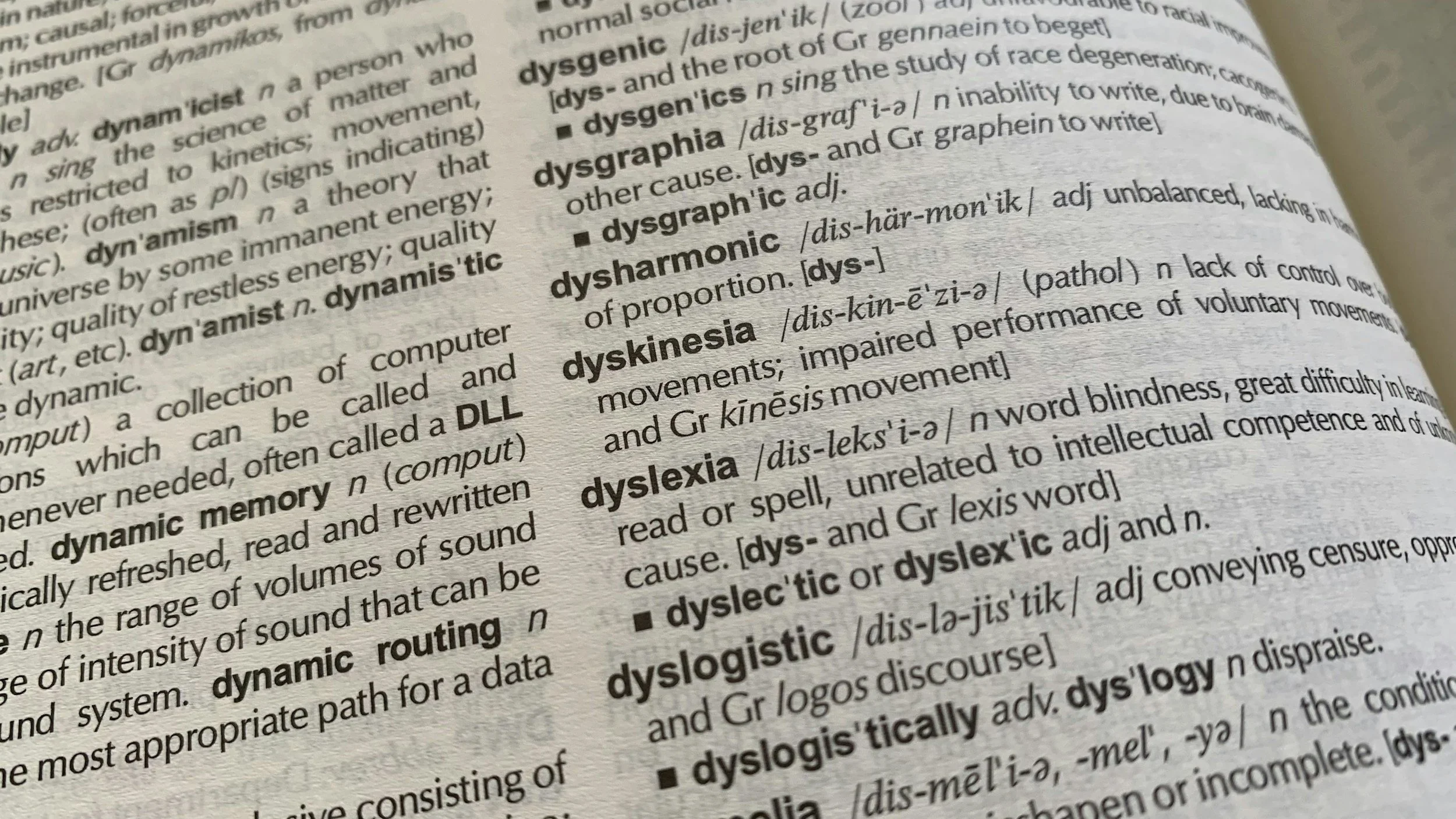
Defining Dyslexia
The definition of dyslexia has developed gradually over more than a century, moving from early clinical descriptions to a widely agreed modern consensus.
In the late 19th century, clinicians such as Rudolf Berlin introduced the term “dyslexia” (1887) to describe individuals with significant reading difficulties despite otherwise typical intelligence. Early case studies, including work by W. Pringle Morgan, helped establish that these difficulties were distinct from general intellectual disability. In the early 20th century, researchers like Samuel Orton shifted understanding away from vision problems toward language processing and neurological origins. This laid the groundwork for later cognitive models. By the late 20th century, research converged on phonological processing as a core difficulty. This led to more consistent definitions used by organisations such as the British Dyslexia Association and the International Dyslexia Association.
A key milestone in modern consensus was the 2025 Delphi study definition, often referred to as the “Delphi definition of dyslexia.” This was developed through a structured expert consensus process involving international specialists in literacy and learning difficulties.
Delphi definition of dyslexia
Dyslexia is a set of processing difficulties that affect the acquisition of reading and spelling.
In dyslexia, some or all aspects of literacy attainment are weak in relation to age, standard teaching and instruction, and level of other attainments.
Across all languages, difficulties in reading fluency and spelling are key markers of dyslexia.
Dyslexic difficulties exist on a continuum and can be experienced to various degrees of severity.
The nature and developmental trajectory of dyslexia depends on multiple genetic and environmental influences.
Dyslexia can affect the acquisition of other skills, such as mathematics, reading comprehension or learning another language.
The most commonly observed cognitive impairment in dyslexia is a difficulty in phonological processing (i.e., in phonological awareness, phonological processing speed or phonological memory). However, phonological difficulties do not fully explain the variability that is observed.
Working memory, processing speed and orthographic skills can contribute to the impact of dyslexia.
Dyslexia frequently co-occurs with one or more other developmental difficulties, including developmental language disorder, dyscalculia, ADHD, and developmental coordination disorder.

Helpful resources
There are many packages and resources out there to support people with dyslexia - here are my top recommendations: